
Braj Kitchen · Sweet
The history of Mathura peda: why this city owns the sweet
Mathura peda is a khoya-based sweet that originated in Mathura, Uttar Pradesh, the birthplace of Krishna. Fresh khoya (mawa), milk, sugar and ghee are cooked together and flavoured with cardamom, then shaped into small flat rounds. Peda is the traditional prasad offered to Krishna, especially on Janmashtami, and the city is so tied to it that "Mathura acts as a brand name for peda."
Buy Mathura peda in Pune: Rs 700 a kg at our Balewadi Phata counter in Baner, open 7 AM to 11 PM every day. For Diwali, 250 g of our Mathura peda is Rs 175 at our counter and on WhatsApp, delivered across Pune on the day you choose, up to Diwali on 8 Nov and for Govardhan on 10 Nov. See the Diwali boxes or the full mithai menu.
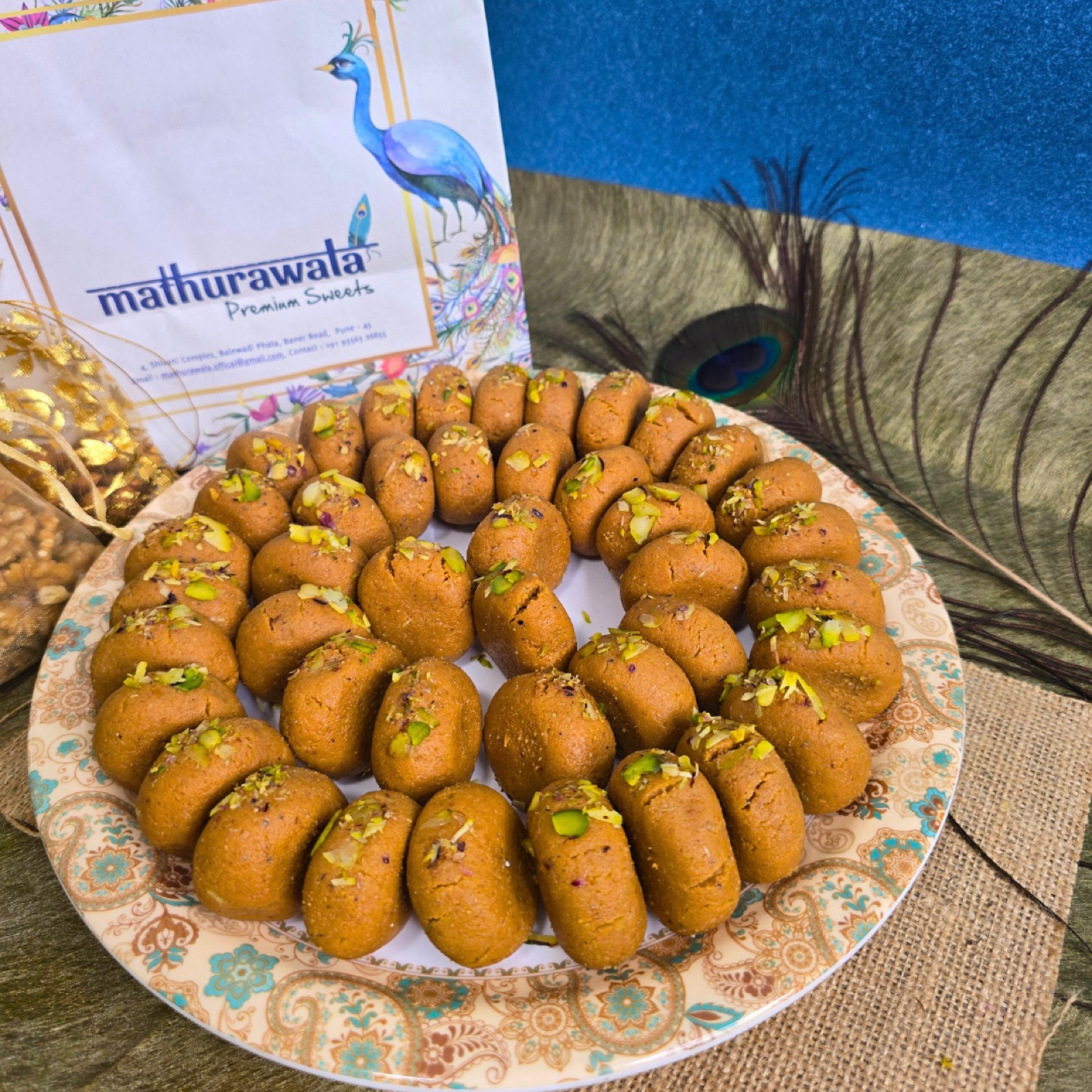
Where Mathura peda comes from
"Mathura peda is an Indian sweet dish that originated from Mathura in Uttar Pradesh, India."[1] Its fame runs deep enough that there is even an old aphorism, "Mathura ka peda au Chhattisgarh ka kheda," and the dish is now classed among the geographical indications of Uttar Pradesh.[1] When people say "peda," many mean Mathura peda by default.
Why Mathura, of all places?
Because peda is, first and foremost, an offering. Mathura is the birthplace of Krishna, and "pedas are considered an essential part of the Janmashtami celebration in India. Every year on this day, Pedas are prepared as Prasad or offering to Lord Krishna."[1] A sweet made to be offered in Krishna's own city becomes that city's signature. For visitors, "Mathura ke pede" are a classic souvenir.[1] The dairy-rich character also fits Braj cuisine, which leans heavily on milk, mawa and ghee.[2]
How Mathura peda is made
The method is simple but unforgiving. As the sources describe it: "To prepare Pedas fresh mawa, milk, sugar, and ghee are cooked together, and cardamom powder is added for taste."[1]
- Cook fresh khoya (mawa) with a little milk and ghee on a low flame, stirring constantly until it deepens in colour and smells roasted.
- Add sugar and cook until the mass thickens and leaves the pan.
- Stir in cardamom powder, then take it off the heat.
- Cool slightly, roll into small balls and press flat into the classic peda shape.
The whole sweet is just khoya, sugar and cardamom. There is nowhere to hide a poor ingredient, which is exactly why the real thing tastes of milk and the fake tastes of sugar.
How to spot real Mathura peda
- Aroma: real peda smells of roasted milk and ghee, not just sweetness.
- Texture: a slightly grainy, melt-in-the-mouth bite from genuine khoya, not a smooth, rubbery one.
- Sweetness: balanced and milky; fakes overload sugar to mask cheap mawa or milk powder.
- Shelf life: pure khoya peda is perishable and best eaten fresh. A peda that lasts weeks at room temperature is hiding something.
- Colour: a natural pale-to-golden tone from slow cooking, not an artificial deep brown.
How Mathurawala makes peda
We make our peda from fresh khoya, the Mathura way, with no preservatives. It is prasad-quality, the same essence whether you eat it at the counter or carry a box home for Janmashtami. This is the sweet that will travel as our packaged and gifting line grows, but the recipe stays the one a Mathura family would recognise.
Frequently asked questions
Is Mathura peda the same as doodh peda?
They overlap. Doodh peda is the milk-and-khoya style, which is essentially the Mathura peda. Regional pedas like Dharwad peda differ in colour and cooking.
Does peda have a GI tag?
Mathura peda is listed among the geographical indications of Uttar Pradesh, reflecting how strongly the sweet is tied to the city.
Can I order fresh Mathura peda in Pune?
Yes. Mathurawala makes fresh khoya peda in Baner, Pune, with no preservatives. Message us for boxes and festive gifting.
Order fresh Mathura peda for home or gifting
Made from pure khoya, no preservatives, prasad-quality. Ask us about Janmashtami and Diwali boxes.
Ask about peda on WhatsAppSources
- Wikipedia, "Mathura peda": en.wikipedia.org/wiki/Mathura_peda
- Wikipedia, "Braj cuisine": en.wikipedia.org/wiki/Braj_cuisine